Pidgin 34 includes contributions from the school: Valentina Aguayo Martiri b. 2001, Santiago, CL; Shravan Arun b. 2001, Aurora, IL; Fernando Avila b. 1995, Mexico City, MX; Marie Baretsky b. 1986, Albany, GA; Arianna Borromeo b. 2001 Manila, PH; Elina Chen b. 2000, Wuxi, CN; Ariel Clipperton b. 2001, Calgary, AB; Masayuki-Matthew Crilley b. 1999, Novi, MI; Franco Denari b. 1995, Hanover, DE; April Dong b. 2001, Louisville, KY; Maya Freeman b. 1999, Toronto, ON; Tyler Gray b. 2002 New Rochelle, NY; Nolan Hill b. 1996, Keene, NH; Ming Rou Hon b. 1999, Penang, MY; John Hunter b. 1959, Philadelphia, PA; Axelle Karam b. 2001, Montréal, QC; Andrew King b. 1997, Cleveland, OH; Loretta Koch b. 1997, Los Angeles, CA; Emmalyn Kukura b. 2001, Columbus, OH; Dominica Kusmierczyk b. 1999, Troy, MI; Ethan Lethander b. 2000, Blacksburg, VA; Aidan Lozano b. 2002, Houston, TX; Chenkun Ma b. 2001, Tangshan, CN; Grace Ma b. 2001, Vancouver, BC; Mason Petros Magemeneas b. 2001, Plainfield, IL; David ‘Casey’ McCracken b. 1964, Philadelphia, PA; Manus McCracken b. 2000, Mount Carmel, PA; Amelia Mills b. 2002, London, UK; Masayoshi Nozawa b. 1997, Ibaraki, JP; Nneoma Onyekwere b. 2001, Dallas, TX; Cristalina Parra b. 2000, Santiago, CL; Nicholas Prystawik b. 1998, Seligenstadt, DE; Kunyue Qi b. 1998, Beijing, CN; Laetitia Ryder b. 2000, Barcelona, ES; David Rypkema b. 2000, Jackson, NJ; Ian St. John b. 2001, San Francisco, CA; Luna Eaton Sharon b. 1996, Santa Clara, CA; Ryan Shin b. 1994, Seoul, KR; Bill Tansley b. 1963, Tom’s River, NJ; Bryce Taylor b. 1994, Las Vegas, NV; Lucia Tian b. 2000, Summit, NJ; Elaine Qin Wang b. 1997, Ningbo, CN; Allison Wenner b. 1999, Dallas, TX; Peipei Wu b. 1999, Taipei, TW; Samet Yilmaz b. 1997, Adana, TR; Ethan Young b. 1994, Columbus, OH; Xinyuan (Jade) Zhang b. 2001, Hong Kong, CN; as well as essays by the following authors: Paul Mosley, Toby (Yung To) Chan and Emily Majors, Cat Chen and Conor Gravelle, Bruce Liang, Maria Ferarri, Niloufar Alenjery and Tommy (Chee Mou) Yang, Nimet Anwar and Mahwish Khalil, Nathan Ehrlich, Hosna Eqbal, Pietro Lora, Ishaan Barett; and features interviews with: Paul Lewis and Darell W. Fields; Daniela Mitterberger and Spyros Papapetros; Tei Carpenter and S.E. Eisterer; Stan Allen, Marc McQuade, Caroline O’Donnell, and Brian Tabolt. Edited by: Shravan Arun, Elina Chen, Ming Rou Hon, Grace Ma, Mason Petros Magemeneas, Manus McCracken, and Allison Wenner. Fall 2026.

We think this issue is about feedback, but we’d love to hear your thoughts. The five of us welcome you to Pidgin 33. Our trek here was dotted with long discussions in N-107 about entries, en-dashes, and entanglements. We didn’t have a theme to start, but as we read through and selected submissions, we began to think about feedback. It’s not really a theme; it’s a process. Venturing with us to grow their pieces, the contributors know it well. And now you arrive, the next voyager on issue 33. Take it on, and let us know your take on it. Until then...
You are here. Your roadmap, the table of contents, is on the cover. On the next page are the people who will join you. Some you’ll meet many times over as they traverse with you—like Cynthia Davidson, whose redlines appear on short writings about memories. We’ve preserved them for you to learn from too. You’ll also catch traces of Whataburger wrappers as you cruise through the essays and experiences that constitute this issue. You’ll approach value. You’ll encounter dystopias of your own creation. You’ll idle at the border. You’ll remember kites in the backyard. Halfway, you’ll meet Hood Century at a halfway point of their own. Toward the end, we’ve compiled all the bibliographies. You’re always welcome to leave notes in the margins, but we’ve left space for you to enter your feedback at the end of the issue.
Pidgin does not condone any abuse of pigeons.
Issue 33 features words, drawings, and images by Leti Ryder, Maria Gabriela Carucci, April Dong, Christopher Loofs, Jono Coles, Mason Petros Magemeneas, Andy Bako, Hampus Thysell, Madeline Kim, Fernando Garrido Carreras, Jerald Cooper, Eli Hockett, Aidan Quigley, Audrey Tseng de Melo Fischer, Samantha Ong, Maya Freeman, Andrew King, and Adrienne Economos-Miller.


Without stable ground, building a foundation is pointless. But with too much stability, the ground calcifies ideas. When the ground beneath our feet shifts, its instability begs questioning. The contributors of this issue are on such ground, describing situated conditions of precarity.
It’s this view from the ground—this rejection of distance—that gathers many of the pieces in this issue. Moving on foot or by boat, looking in between or around a corner, staring at ceilings or across landscapes (or both), this issue’s contributors try to make sense of their worlds and how they came to be. Their interest in experience is not only phenomenological, but something more intimate, more affective, and more self-conscious. Proximity renders neutrality meaningless, and positionality emerges from our connections. Interweaving first-hand observations and speculative imaginings, the issue describes personal revelations while engaging with current debates in the field.
The unstable grounds and imbalances explored here are often intimate despite the vast networks they implicate. As Donna Haraway reminds us, our views are never objective. They are always a view from somewhere: situated perspectives made of past experiences, histories we know, and those we do not that have nonetheless brought us to a particular vantage point. Digging where we stand reveals the inequalities hidden by quantified variables as it cuts across the database itself. This disorienting assemblage echoes the daily strangeness of our hybrid digital and physical existences.
The world requires us to rethink the disciplinary, discursive, and epistemic conditions in which our tools have been developed and deployed, and reflect on all kinds of historical contingencies of the production of architectural knowledge. Our contributors encourage us to relate to our work in a more authentic and politically conscious way. They demonstrate through the second-person and three-dimensional scans, revealing everyday hyperobjects, a contorted quasi-object, and the immaterial.
Issue 32 features words, drawings, and images by Maysam Abdeljaber, Guillermo S. Arsuaga, Sarah Aziz, William Dolin, S.E. Eisterer, Ariane Fong, Andy Kim, Tekena Koko, Lindsey Krug, Ryan Tyler Martinez, Dhruv Mehta, Jonathan Russell, Steven Sculco, Shivani Shedde, Joshua Tan, Samarth Vachhrajani, Pavan Vadgama, and Zee Ruizi Zeng.

Nothing is even. Every clear image is merely a question of resolution. A question of the threshold beyond which the fine-grain turns into the invisible, the point at which the parts are subsumed into the whole. Ratios and tolerances hold an edifice of exactitude in the eyes of the observer, leading them to believe in the fiction of a straight line, a flat floor, an even edge, an uninterrupted field. Zoom in far enough and the pixels are revealed, the tiny splines that make up the continuous curve. Reality is rendered obsolete—a matter of slippery perception, scale and distance.
0.62 inches separates Pidgin 31 from past issues. This new measurement, roughly the width of a thumb, nestled against the issue’s interior fold, revives the trusty domain of textual surplus: the footnote. Citations, asides, comments, and notes occupy this new zone of marginalia. Like the pea under the proverbial mattress pile, this change is perhaps only noticeable to the most neurotic editorial princesses (yours truly), but this shim on the internal edge has subtly adjusted our editorial landscape. It pushed our processes off-kilter, and all-but-obliterated our old standby, the endnote. We introduced the incremental fissure opened by this tiny column of text with the hopes of allowing readers to take in both the body of text and its references concurrently. But it also exposed the content of the issue. Much of what follows deals with perceptual minutia and the fine lines that separate reality from fiction, care from obsession.
At 196 pages, the issue’s slimness itself speaks to the impact of the single increment, and the scale of magnitude that can be achieved by a modest shim. It reacts against the bulk of Issue 30, and the loud, ceremonial significance of three decades of Pidgin publications. This issue proclaims its importance more softly, yet solidly—owning every fractionated inch of material. The footnote’s carefully-guarded space, at times empty, at times brimming with content, exists as an integral part of the whole picture, a magnified pixel that lines the inside of each page, contributing to its bulk.
After reading Issue 31, you may want to try putting it under your chair leg. Sit back down. How do things look, after the adjustment?
Pidgin 31 includes contributions from:
David R. Shanks, Robin V Hueppe, Pablo Castillo Luna, Jacquelyn Do, Joey Guadagno, An Tairan, Win Overholser, Amelyn Ng, Anoushka Mariwala, Zachary Schumacher, Owen Caraway, Lucas Gillie, Jacqueline Mix, Andrew Herscher, Evan Pavka, Guanglei Zhang, Xingyu Zhang, and Fangyi Jiang.
Fall 2023

It is common practice to imbue anniversaries or milestones with an added degree of reverence, symbolism, and celebration. Looking back on the process of putting together the thirtieth issue of Pidgin, it seems as though we have, perhaps unwittingly, become a victim of these cliches. A long time coming, the release of a complementary zine by Boot Boyz Biz alongside an anniversary issue is serendipitous. It seems as though a thirtieth issue—it’s something about those multiples of five—is the correct moment to introduce change. In this case, Pidgin for the first time has endeavored beyond the confines of its single volume and invited an outside author to create through a previously unexplored medium. In reflecting upon this decision, the pairing with BBB seems extremely fitting. Since Pidgin became officially un-themed with Issue 23, we have witnessed the re-inscription of new value to the name of Pidgin itself, as we see ourselves as working to gather all the disparate thoughts, reflections, quips, critiques, and theories scattered throughout architectural discourse into one bound object, greater than the sum of its parts. BBB operates similarly through a hyper-text type model that brings together quotes, illustrations, and diagrams into singular graphic spreads that in their cohesion produce new meaning and disseminate knowledge in new ways previously unexplored by traditional academia. We are honored to have worked with them over this past year and a half to bring you this zine.
In a further effort to span across mediums, Issue 30 also marks the launch of Pidgin’s radio show which will be running on the newly-founded SoA Radio. We hope that the radio will give us the opportunity to not only expand upon the content itself with interviews from the authors, responses to pieces, or transversal connections across issues, but expand our reach as well by making Pidgin accessible to those who are differently-abled.
Throughout the issue you may also stumble upon some QR codes, which will ask you to utilize your smartphone device to access the AR filters and supporting digital content the authors have crafted. Although Pidgin is committed to remaining a printed journal, we are always interested in allowing authors the freedom of investigating new forms to express their ideas. The ambition to expand Pidgin’s format and accessibility has led us to the decision to return to our previous publishing schedule of one issue per year. Moving forward, we plan to release an issue every spring, allowing the editorial board and our contributors more time to thoughtfully craft pieces into a significant whole and to create more possibilities for future collaborations.
All of that is to say: we’re 30, we’re flirty, and we’re thriving. Thanks for sticking around with us—we’ll see you again next year!
Issue 30 includes contributions from:
Courtney Coffman, Tiantian Lou, Ian Erickson, Remi McClain, Oliver Moldow, Sarah Pak, Elizabeth Bowie Christoforetti, Jocelyn Williams, Zoe Osborne, Jonah Coe-Scharff, Casey Breen, Nico Masters, Brandon Clifford, Taylor Lynn Boes, Mackenzie Muhonen, Clark Thenhaus, Daniel Hall, Manuel A. Zermeno, Devanne Brookins, Taka Tachibe, Samuel Dubois, Adrian Silva, Maiss Razem, Esteban Salcedo, Bill Millard.
Spring 2022
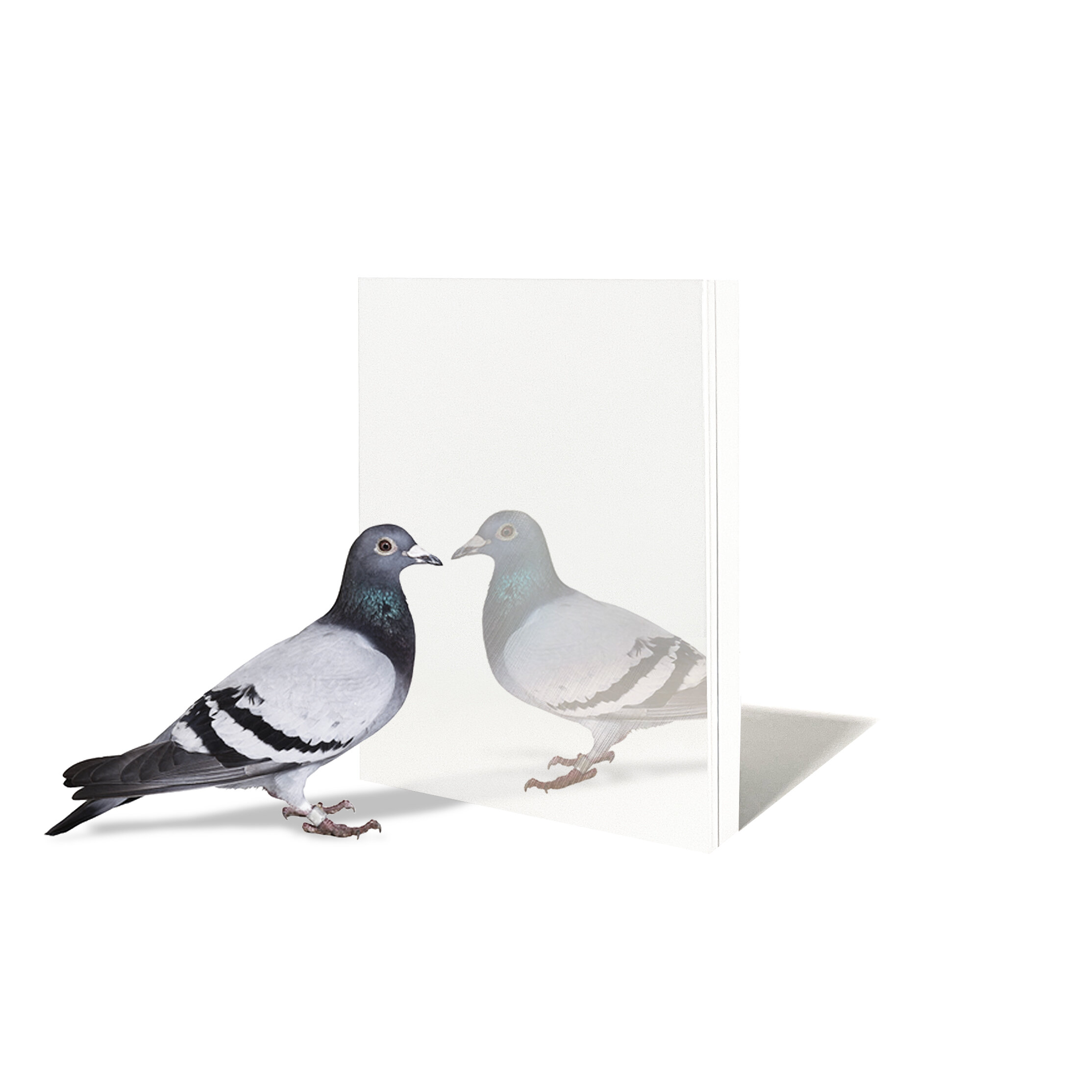
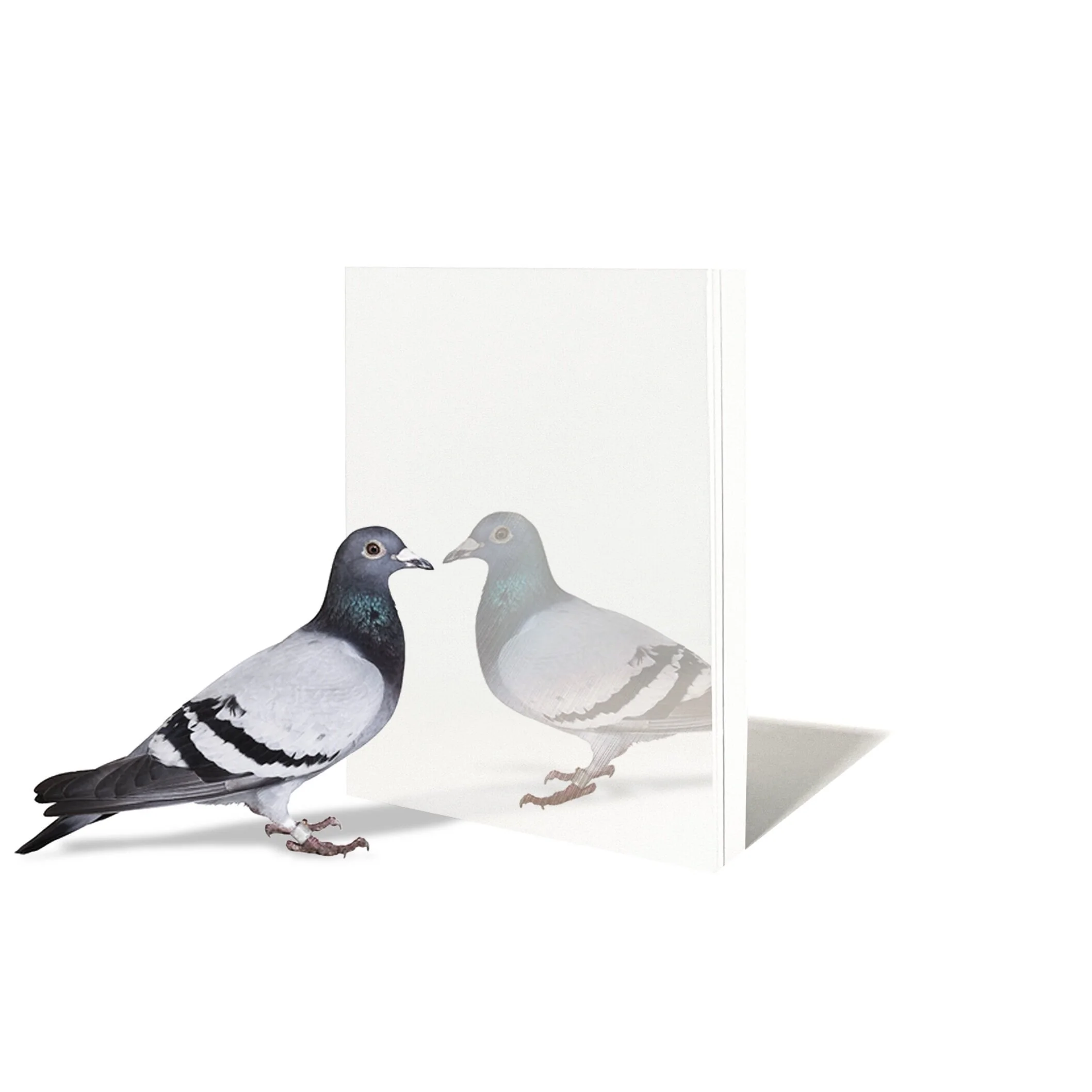
As any Craigslist-poster attempting to part ways with an old mirror will tell you, it can be hard to photograph the glass without capturing your own reflection. In an attempt to remove themselves from the image, Craigslist sellers photograph mirrors from above, the side, hiding behind door frames, and take acrobatic positions to make only their hands visible. In desperate cases they resort to elaborate tripod rigging and self-timing cameras to escape the frame entirely.
What becomes clear in this elaborate choreography—between object, photographer, apparatus, and reflection—is that attempting to capture a mirror inevitably reflects what is behind you. Moving closer towards or backing away from the frame calibrates the field of vision, exposing different aspects of the capturer’s domestic environment. Only so much can be hidden: it’s unavoidable for your reflection to be partially captured.
Pidgin has always strived to be a place for reflection, and the current issue seems to reflect our present situation with all the inevitability of a craigslist photo . . . For us, this reflection is not about navel gazing or nostalgia, but about taking stock of the present, examining what changes are in motion, and using that examination to catalyze future inquiry and action.
Pidgin 29 includes contributions from:
Isabelle A. Tan, Noa Jansma, Emmanuel Osorno, Reese Lewis, Ang Li, Ana Peñalba, Billy Dufala, Jeff Tao, Rami Kanafani, Anna Renken, Malcolm Rio, Jennie Livingston, Oana Stanescu, Virgil Abloh, Nóra Al Haider, the students of New Spaces of Justice, Christine Boyer, Anthony Vidler, Maeliosa Barstow, Simon Lesina-Debiasi, Chris Myefski, Liz Gálvez, Neeraj Bhatia, Cesar Lopez, Ryan Roark, Erik Tsurumaki, Martín Cobas, Anna Gasha.
Spring 2021


BZZZZZ! PING! VRRRRRR! COO ROO-C’TOO-COO!
In the past 6 months our attention has been pulled, split, and redirected as parallel barrages of unfolding events have demanded our response. Pidgin 28 presents an opportunity to reflect on the past year in the context of the shifting attention of architectural discourse. In this regard, we look to our selection of authors who help to point backwards and forwards at moments through which we can better understand where we are today. Pidgin, like everyone else, is just trying to make sense of the rapid succession of events shifting our understanding of the world as we know it.
Pidgin 28 includes contributions from:
Princeton School of Architecture for Black Lives, Megan Panzano, Michael Ferguson, Daham Marapane, Caleb Negash, Sam Naylor, Elaine Stokes, Linda Zhang, Biko Mandela Gray, Alisha Kapoor, Maya Sorabjee, Jaewoo Chon, Giulia Amoresano, Carrie Gammell, Katherine Taylor-Hasty, Dexter Walcott, Mike Silver, Melissa Rovner, Tekena Koko, Kapp Singer, Larissa Guimarães, Ian Lowrie, and Patty Hazle.
Fall 2020


When assembling Pidgin 27 in January and February of this year, the editorial board—like many across the globe—was unaware of the circumstances that the spring of 2020 would bring. In a matter of days, we have been inundated with information about the transmission of the virus and have locked ourselves up in an effort to slow its spread. It is safe to say we are cooped up, some of us far from home, clutching onto our digital communication machines to remain somehow connected to one another. This new virtual reality makes us acutely aware of what we have so suddenly lost. The physical spaces of intellectual encounter seem impossible to replicate from the safety of our self-isolated bubbles. And the viral menace outside our doors reminds us of our all-too-human physicality. As the necessities for architectural space shift around us, its significance becomes more obvious, as does the significance of critical discourse surrounding it.
Pidgin 27 includes contributions from:
Basile Baudez, Iman Fayyad, Mahadev Raman and Current Interests, Daniel Maslan and Mariah Smith, Jacob McCarthy, Jeffrey Zhenhua Liu, Esra Akcan, Katie MacDonald and Kyle Schumann, Zach Colbert, Tiago Torres-Campos, Michelle Shu Meng, Eduardo Mediero, Dana Cuff, Erica Allen-Kim, Justine Yan, Maura Chen, André Tavares and Diego Inglez de Souza, and Frédéric Schnee.
Spring 2020


Shortly after the launch of Pidgin 25, we held a panel conversation at the School of Architecture with several of Pidgin’s former editors to celebrate the new issue and take a look back at the publication’s decade-and-a-half history. Well, we’ve returned with the same, once again. Our little journal remains 4 1/2” x 6 1/2”, (almost) fits in your pocket, and excels in its primary use as a paperweight. And yet we’ve assembled an issue that expands the range of formats suited for print publication. What does the print journal become as sites of discourse shift toward digital and event-based formats? Rather than simply presenting knowledge for study, Pidgin 26 aims to open conversations.
Pidgin 26 includes contributions from:
Aynsley Vandenbroucke, Elliott Sturtevant, Spyros Papapetros, Brendan Fernandes and Thomas Kelley, Niloufar Nelly Goodarzi and Nicolas Dagenais-Lussier, Lukasz Stanek, Stefana Parascho, Kaitlin Faherty, Fiona Connor and Kavior Moon, Chibbernoonie, Spinagu Studio, Irene Chin, Intentional Estates Agency, Roberto Boettger, Monica Hutton, Marshall Brown, and Ryan Scavnicky. Pidgin 26 features a selection of illustrations by Will Fu.
Fall 2019


When Pidgin “un-themed” we hoped the open call could serve as a bellwether for how the architectural discipline itself might be “themed” at a given moment. The pieces in Pidgin 25 suggest not so much a disciplinary theme as themes, or better yet, a topology of correspondences with clustered densities. We have been repeatedly struck by the connections and parallels that already exist among submissions we received, even as the breadth of their overall range defied easy thematization.
Pidgin 25 includes contributions from:
Anthony Vidler, Emma Macdonald with photographs by Anna Puigjaner, Brittany Utting, Emma Macdonald and Brittany Utting, Adamo-Faiden, Courtney Coffman, Julian Harake, Max Kuo, fala atelier, Ruo Jia, Neyran Turan, Ryan Roark, WASA, Michael Robinson Cohen, Jae Shin, V. Mitch McEwen, M. Wesam Al Asali and Sofia Singler.
Spring 2018


Pidgin 25 includes contributions from:
Erin Besler and Ian Besler, Zach Cohen w/ response by Ryan Luke Johns, Andrea Tse Fung Ng, Daniel Jacobs, Zachariah DeGiulio, Joanna Grant, Savia Palate, Isidoro Michan Guindi, Justin Fowler, George Grylls , Mélanie Daguin, Andrej Iwanski, Daniel Roche, Ali Reza Shahbazin, Parsa Khalili, and Steve Martinez
Fall 2018


Join the Pidgin editors in a conversation to explore the potential of what an un-themed, student-run publication could mean in contemporary architectural discourse:
“So what does everyone think about un-theme-ing? Why did we decide to un-theme?”
“For one, we wanted to get a better sense of the contemporary moment without forcefully bracketing it in a thematic framework. “
“to be nimble responsive and reflect on things that feel more urgent right now. Breaking from themes also allows us to refocus on the print format…how could we use it differently…”
Pidgin 23 includes contributions from:
Samia Henni, Sylvia Lavin, Brittany Utting, James Michael Tate with response by Jennifer Bonner, Jongwan Kwon with response by Debbie Chen, Jimmy Carter, Brandon Clifford, Evan Pavka with response by Jaffer Kolb, Min Keun Park, Thomas Feary, Igor Bragado and Rennie Jones with response by Spyros Papapetros, A. Melissa Harris with response by Michael Young, and Emma Benintende and Kate Yeh Chiu.
Spring 2018


Pidgin 21 includes contributions from:
Prairie Studio; CJ Lim; Jessica Colangelo; Jonathan A. Scelsa, Jennifer Birkeland and John Paul Rysavy; Samuel Clovis; Sarah Gunawan; Kevin Pazik; GS Phillips and Tyler Swingle; Colleen Tuite and Ian Quate; Ellen Garrett; the Bittertang Farm; Julian De Smedt; Gillian Shaffer; Emma Mendel; Studio Cadena; WAI Think Tank; Frank Barkow and Regine Leibinger; François Sabourin and Laura Salazar; Tita Giese; Young & Ayata; and Thena Jean-hee Tak.
2017


Pidgin 21 includes contributions from:
Andrew Holder; Katherine Jenkins and Parker Sutton; Rennie Jones; Felipe Orensanz; Michael Abrahamson; Jonathan Louie; Jedy Lau and Myles McCaulay; Jonathan Robert Maj; Curtis Roth; Julian Harake; Heidi Alexander, Jamie Barron, Courtney Coffman and Ziqi Liu; Taylor Cornelson; Em Chang; Joanna E. Grant; Maria Letizia Garzoli and David Himelman; Michaela Friedburg; and Louis Melville Rutherford.
2016


Pidgin 20 includes contributions from:
Mark Acciari, Tristan Blackmore, Igor Bragado and Miles Gertler, Phillip Denny, Curt Gambetta, Michael Glassman, Julian Harake, Jelena Loncar, Rebecca March and Sean Morgan, Kyle Miller, Caroline O’Donnell, Masha Panteleyeva, Shane Reiner-Roth, Joanna Sotiriou, Brian Tabolt, Angela Wheeler.
Fall 2015


Pidgin 19 includes contributions from:
Emily Abruzzo and Gerald Bodziak, Erin and Ian Besler, Laurel Broughton, Nat Chard, Jonathan Crisman, Ben Denzer, Victor Enrich, David Eskenazi, Sebastiano Fabbrini, William Feuerman, Adam Fure, Swarnabh Ghosh, Leen Katrib, translation of Frederick Kiesler, Andrew Kovacs, Thomas Mical, Matthew Mullane, On the Road, Spyros Papapetros, Eeva-Liisa Pelkonen, Jon Piasecki, Daria Ricchi, Brendan Shea, UniversalAssemblyUnit, and Leslie van Duzer.
Spring 2015


The boundaries of architecture have expanded from self-reflective formal and functional space into transnational realms of social and political space. These new networks and systems have inevitably implicated architecture today into questions of ethics.
Pidgin 18 is interested in these contested spaces. This issue presents appraisals, statements, methodologies, and examinations that question the ethical conditions and relations in which architecture is produced and experienced.
Pidgin 18 includes contributions from:
Karla Britton, Wendy W. Fok, Andrew Frame, Athanasiou Geolas, Marta Jecu, Pablo Lorenzo-Eiroa, Jessica Myers, Cyrus Penarroyo, Mauricio Pezo, Sarah Rafson, Mahfuz Sultan, Hans Tursack, Shota Vashakmadze, and Zigeng Wang.
Fall 2014


Bluster, bluff, and brinksmanship are remarkable rhetorical tools, utilized to great effect by the best (and worst) of design practice. The desire to hide behind bravado is acute—fake it till you make it—but it also inoculates us to the problems of illusionism: what do we really mean? What is truly at stake? And why should we care? As one critic remarked in a final student review, “your renderings are incredibly seductive. But I don’t want to be seduced; I want to be convinced.”
And so we set out in this issue to ask for a bit of verification: facts to back up opinions, designs with implications, and debates containing substance over dodges. After hearing all that has been said over the years (even within our own pages), we’ve been led to the inevitable question: do you even lift?
Pidgin 17 includes contributions from:
Sanger Clark, Beatriz Colomina, René Daalder, designtoproduction, Sean Dockray, Ignacio González Galán, Andrés Jaque, Axel Killian, Jffer Kolb, Evangelos Kotsioris, Ang Li, Forrest Meggers, Anna-Maria Meister, Michael Meredith, Nicholas Pajerski, Jonah Rowen, Brendan Shea, Phoebe Springstubb, Ross Wolfe, Claire Wood, and Lily Zhang.
Spring 2014


Pidgin 16 includes contributions from:
Andrew Holder, Peter Pelsinski, Daria Ricchi, Robert Gerard Pietrusko, Dorit Aviv, Scrap Marshall, Jake Matatyaou, Jürgen Mayer H., Gary Leggett, Caitlin Blanchfield and Greg Barton, Margo Handwerker, Mustafa Faruki, Hans Tursack, Lizzie Yarina and Zheela Qaiser, Enrique Ramirez, Joseph Altshuler, Dolores Hayden, Ellen Shakespear, and Whitney Krahn.
Fall 2013


“Inhuman architects! You have sinned; you have adopted the spirit of the rich; you have done your calculations with them: everything on one side, nothing on the other… Barbarians! Why have you lent yourselves in this way to the proprietors’ greed? Accomplices of their insulting hard-heartedness, you have debased your art.”
- Louis Sebastien Mercier, Tableau de Paris (1783)
Pidgin 25 includes contributions from:
Andy Vann and Jordan Carver; Matt Clarke; Hyun-Tae Jung; Caroline O’Donnell; Griffin Frazen; Sara Stevens; Chris French; Erica Allen-Kim; Andrew Kovacs and Michael Osman; Peggy Deamer; interview with Yancey Strickley by Pidgin editors; Nicholas Pajerski; Sergio Galaz-Garcia and Alfonso Maldonado; Sheldon Garon and Reinhold Martin; Common Room; Jonathan Levy and John Harwood; Aleksandr Bierig, Julia Chapman and Gabriel Fries-Briggs; Willem Boning; Samuel Stewart-Halevy; Cyrus Penarroyo and Loren Yu.
Consulting guest editor: John Harwood
Spring 2013


The editors of Pidgin sent out a series of questions about luck.
6) Why is there no 13th floor?
There is, it’s just called 14.
Pidgin 14 includes contributions from:
Phoebe Springstubb, Cyrus Penarroyo, Paul Lewis, Griffin Ofiesh, Laura Isabel Ettedgui, Henry Ng, Jesse Seegers, Trudy Watt, J. Brantley Hightower, Grayson Cox, Michal Koszycki, Ang Li, J. Robert Hillier, and William Sims.
Fall 2014


Pidgin 25 includes contributions from:
Jaffer Kolb, Joy Wang, Javier Marchan and Richard Saxton with introduction by Margo Handwerker, Antonina Weiss, Shawn Protz and Chrissy McMillan, the Malleabalists, Willem Boning, John Szot, Andrew Kovacs, Jimenez Lai, Alexis H. Cohen, Leah Beeferman, José Aragüez, Frances Whitehead, Jürgen Mayer H.
Spring 2012


Pidgin 11 includes contributions from:
Aleksandr Bierig, Chris Hillyard, Adedoyin Teriba, Reyner Banham and Dennis Crompton with introduction by Irene Sunwoo, Razvan Ghilic-Micu, Dieter Janssen, Lydia Xynogala, Jonathan Solomon, Philippe Rahm, Noah Simblist, Thomas Hillier, Willem Boning, Alexander Maymind and Matthew Persinger, Brandon Clifford, Mariesha Blazik, and M. Christine Boyer.
Fall 2011


Pidgin 10 includes contributions from:
Matthew Clarke, Joy Knoblauch, Sylvia Lavin, Patrick Tierney with Michael Meredith, Thomas Schröpfer, Daniel A. Barder, Center for Architecture Urbanism and Infrastruction (CAUI), the Woodrow Wilson School Vieques Policy Workshop with Daniela Fabricus and Allora Calzadilla, Michael McKay, Luis M. Mansilla and Emilio Tuñón, Enrique Ramirez, João Batista Vilanova Artigas translated by Vanessa Grossman, Iben Falconer, Yannis Aesopos and Petros Babasikas, Gisela Baurmann, Spyros Papapetros, Benjamin Rice, Kris Harzinkski, Vivane Huelsmeier, and Charles Moore.
Spring 2011


Pidgin 9 includes contributions from:
Enrique Ramirez, Joshua Longo, Thomas Hirschhorn with Garrett Ricciardi and Julian Rose, Roberto Burle Marx translated by Catherine Seavitt-Nordenson, Jorge Orozco Gonzalez, Marcus Carter, Five Fellows, Patrick Ciccone, Raguneth Vasudevan, Lisa Lee, Brandon Clifford and Wes McGee, Umberto Eco translated by Britt Eversole, Bryony Roberts, Joseph Claghorn, Jimenez Lai, Osnat Tadmor, Anne Tyng interviewed by Sam Stewart-Halevy, John Cooper, Nicholas de Monchaux, and Jesse LeCavalier
Fall 2010


Pidgin 8 includes contributions from:
Leo Henke and Gerrett Riccardi; Joseph Bedford; Sara Stevens and Joy Knoblauch; Brandon Clifford; Edward Eigen; WORKac; Justin Fowler; Princeton Lighting Group; Lucia Allais; Bob Hillier; Jason Kelley Johnson and Nataly Gattegno; Shawn Protz and Philip Tidwell; Vanessa Grossman; Julia Chapman; vPPR; Jonathan Enns; Marc Britz; Alex Wall, Martin Roth and Marcus Kopper; Alysa Nahmias; Martin Hogue, Michael Lis and Samantha Lynch; Luis Casteneda; Toyo Ito translated by Jessie Turnbull'; Princeton and Patras; Princeton Archives.
Spring 2010


Pidgin 7 includes contributions from:
Stephanie Lee, Milena Stopic, Marc Britz, Jeffrey Kipnis, Anne Romme, Alejandro Zaera-Polo, Craig Cook, Bryony Roberts, Jonathan D. Solomon, Michael Wang, Kevin Hayes, Diana Kurkovsky, Grace Catenaccio, the Animation Seminar, Miguel Centeno, Laura Diamond, Emily Greene, Jessica Reynolds, Jonathan Enns, Frank Barkow, Antoni Gaudi translated by Pep Aviles, Rosemarie Trockel with text by Brigid Doherty.
2009


Pidgin 6 includes contributions from:
Stan Allen and Sarah Whiting; Michael Graves; Ari Kardasis; Catherine Ingraham; Kate Wollman; Philip Lim; Princeton’s ARC526; Gunter Zamp Kelp translated by Steven Lauritano; Yasmin Vobis, Aaron Forrest and Ajay Manthripagada; Rafi Segal; Pidgin Editors; Maxi Spina; Gina Greene; José Esperanza; Chris Hillyard; Catherine Seavitt; Lydia Kallipoliti and Alexandros Tsamis; Zack Cooley and Alenya Becker; Anthony Fontenot, Jakob Rosenzweig and Anne Schmidt; Sam Stewart-Halevy; Kate Nesin; Frank Mahan; Situ Studio; Johnathan Enns; Adolf Behne translated by Molly Wright Steenson; and Spyros Papapetros.
Fall 2008


Pidgin 4 includes contributions from:
Stan Allen, Princeton’s ARC561, Craig Buckley, Chris Hillyard and Edward Yung, Pidgin editors, Rosalyne Shieh, Ryan Neiheiser, Alex Kitnick, Peter Eisenman, Joseph Bedfor, Philip Tidwell, Liz Diller, Miriam Waltz, Susan Cherbuliez, David Orkand, Florencia Vetcher, Enrique Ramirez, Spyros Papapetros, Stefan Röschert, Alayne Kaethler, Marc Simmons, Aaron Forrest, R.E. Somol, Kate Snider, Yasmin Vobis, Bruno Zevi translated by James Hodson and Rachel Bleiweiss-Sande, and Edward Eigen.
Fall 2007


Pidgin 3 includes contributions from:
Florian Idenburg, Edward Eigen, Konrad von Meyenburg, Israel Kandarian, Meredith TenHoor, Ernesto di Casarotta, Erik Johnston, Michael Young, Joy Knoblauch, Wendy Fok, Gavri E. Slasky, Frank E. Mahan, Maya Galbis, Padma Maitland, Alicia Imperiale, Aurel von Richthoffen, Brian Tabolt, John Rajchman, Elizabeth Linden, Charlotte Bocci, Anthony Vidler, Jeff Szeto, William Drenttel and Jessica Helfand, Marc Simmons, Mario Gandelsonas, and Ron de Villa.
June 2007


Pidgin 2 includes contributions from:
Rafi Segal, Beatriz Colomina, Lizzie Hodges, Andrew Heid, Meredith Miller, Marc McQuade, Steve Chen, Leonardo Diaz-Borioli, Caroline O’Donnell, Ryan Neiheiser, Little Magazines, Peter Stec, Brian Tabolt, Chris Cornecelli, Remington Steel, Sarah Whiting, Kyle Reynolds, Els Verbakel, Michael Wang, Eva Franch Gilabert, Jeff Szeto, Alysa Nahmias, Henry van de Velde translated by Kathryn Schoefert and Spyros Papapetros, Ling Fan, and Annie Choi.
January 2007


On September 25th, 2005 the students and faculty of the Princeton School of Architecture received the following email. Pidgin (almost 1 year later) is the result.
“To All-
We are writing because we feel that there is a vast amount of good work at this school that is unaccessible to our fellow students, not to mention the outside world. To address this issue, we are proposing the formation of a publication. In contrast to typical university journals, the emphasis will be on energy, ideas and speed rather than polished presentations.
There has been a lot of talk about this, now it is time for action. To this end, (and as a preliminary step) we are taking the initiative to ask you all to submit work - any work. Papers, unfinished papers, fragments, lists, photographs, film stills, projects, ideas, tips, provocations, drawings, sketches, manifestos, fashion, recipes, etc. ANYTHING you want to get out there.”
Pidgin 1 includes contributions from:
Stan Allen, David Allin, Stepanie Choi, Troy Schaum, Maya Galbis, Rosalyne Shieh, Nera Calvion and Daniel López-Pérez, Spyros Papapetros, Siegfried Ebeling translated by Kathryn Schoefert, Ling Fan, Chris Leong, Rena Rigos, Carolyn Yerkes, Brian Tabolt, Ajay Manthripragada, Gavri E. Slasky, John Hunter, Eva Franch Gilabert, Caroline O’Donnell, Rafi Segal, Alysa Nahmias, Marc McQuade, Adam Frampton, and Edward Eigen.
Spring 2006
No results match your search. Try removing a few filters.

